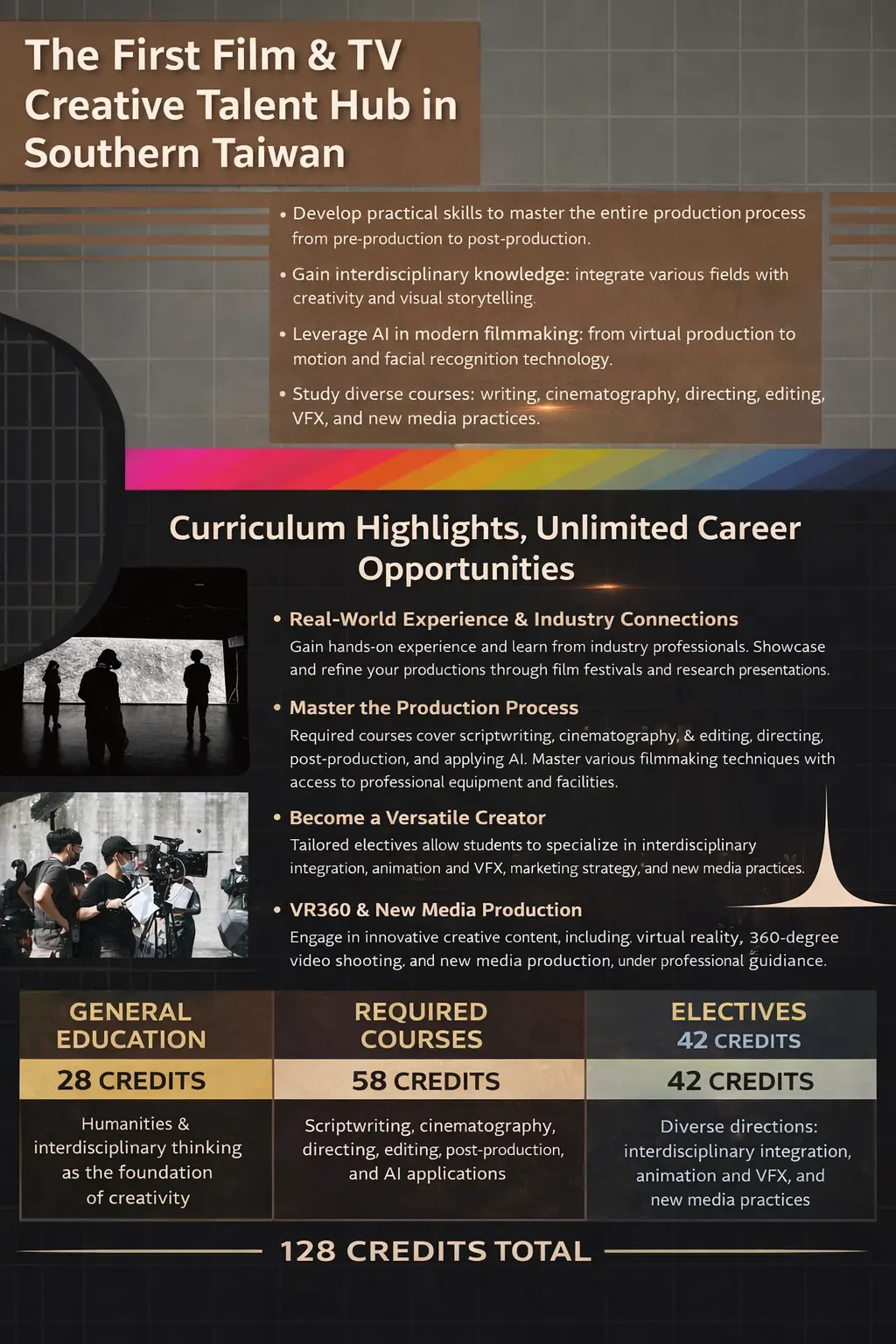
The department’s curriculum aims to cultivate film and television professionals with strong creative and production skills. Students must complete 128 credits to graduate. The curriculum is divided into three categories: 28 credits of general education, 58 credits of required courses, and 42 credits of electives. General education focuses on humanities and interdisciplinary thinking as the foundation for creativity. Required courses cover core professional areas such as scriptwriting, cinematography and editing, directing, post-production, and AI applications, helping students master the entire production process from pre-production to post-production.
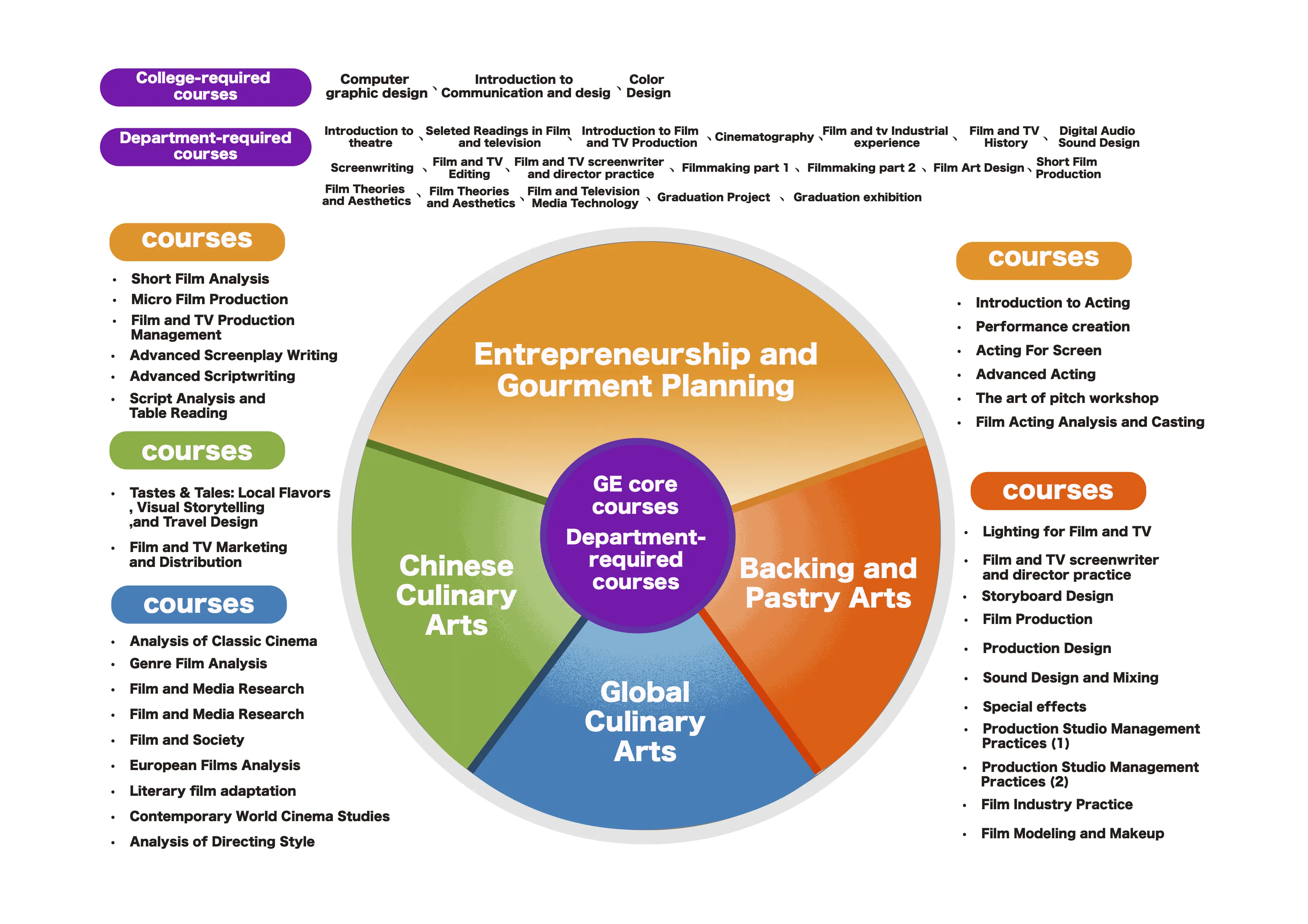
The department offers five major specializations within its curriculum structure. The core includes university and departmental required courses, establishing both theoretical and practical foundations in film creation and media communication. Surrounding the core are four professional areas: Film and Performance, Film Technology, Cultural Aesthetics, and Interdisciplinary Creation. Film and Performance emphasize scriptwriting, microfilm production, and acting training; Film Technology includes cinematography, lighting, sound recording, special effects, and post-production; Cultural Aesthetics focuses on film theory, directing styles, and cultural studies.
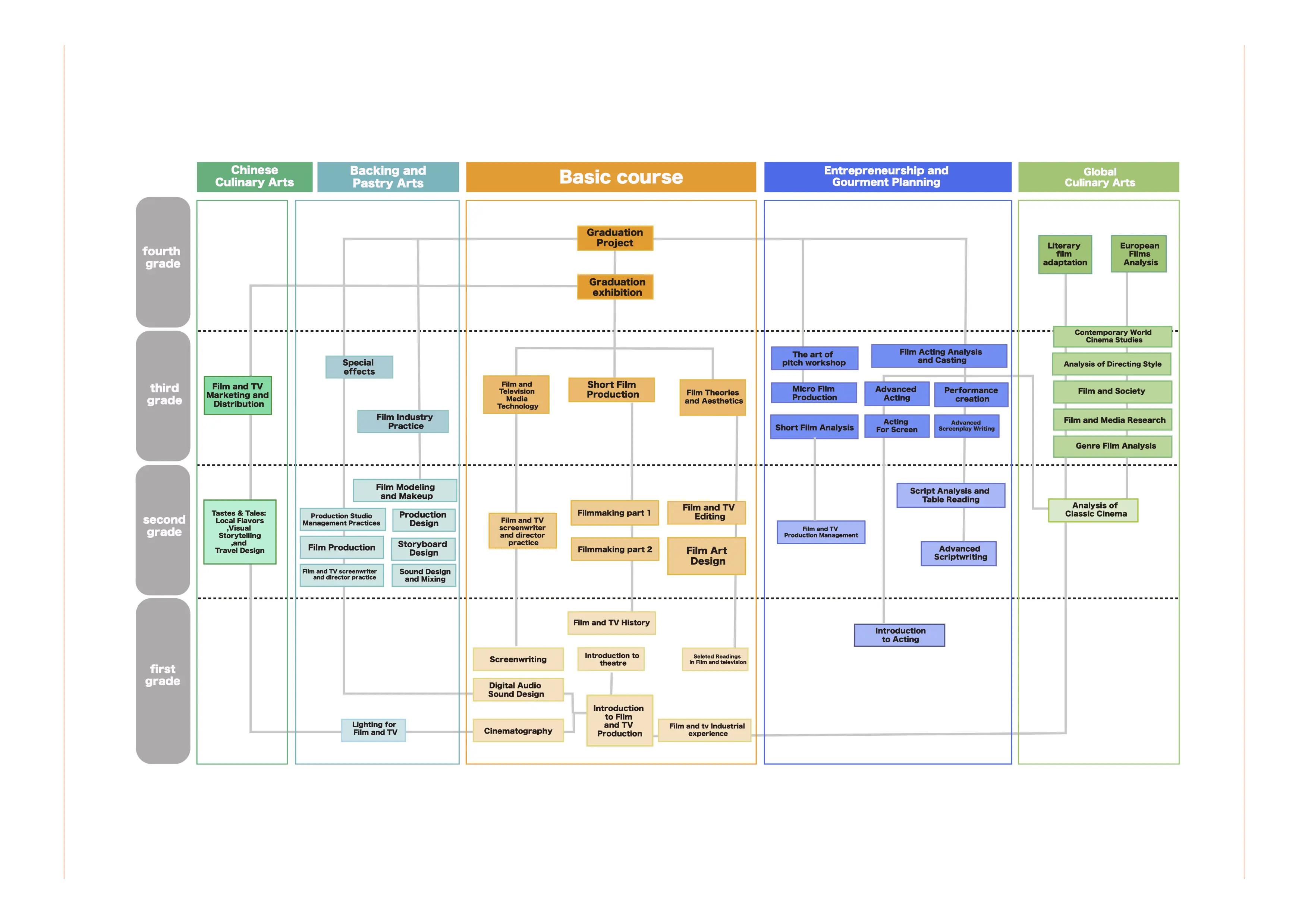
The department’s four-year curriculum plan is divided into five main areas: Interdisciplinary Creation, Film Technology, Foundation Courses, Film and Performance, and Cultural Aesthetics. The first year focuses on foundational training building both theoretical and technical foundations. In the second year, students move toward professional specialization, learning Directing Practice, Film Production, and Set Design. In the third year, students deepen their professional skills through courses such as Visual Effects, Short Film Production, and Character Analysis. The fourth year centers on graduation projects and exhibitions, integrating prior learning into creative outputs.